Ceramic coating bonds to automotive paint through a controlled chemical reaction with the clear coat, forming a durable, glass-like protective layer that integrates with the paint system rather than sitting on top of it. This bond forms via crosslinking of silicon dioxide (SiO₂), creating a semi-permanent structure at the molecular level.
Once fully cured, the coating enhances resistance to UV damage, oxidation, chemical staining, and light abrasion while improving gloss, surface slickness, and ease of maintenance. Unlike waxes or traditional sealants that degrade quickly, ceramic coatings are designed to chemically integrate with the clear coat for long-term protection.
How Ceramic Coating Chemically Bonds to Automotive Paint
The effectiveness of ceramic coating in Houston, TX, depends less on the product itself and more on surface chemistry and preparation quality. Proper bonding requires a clean, corrected, and contamination-free surface.
Surface Preparation and Paint Correction
Before any coating is applied, the paint must be brought to a uniform and chemically stable state. This includes:
- Removal of iron contamination embedded in the clear coat
- Tar, road film, and adhesive elimination
- Multi-stage machine polishing to correct swirl marks and oxidation
- Final solvent wipe to remove oils and polishing residues
In real-world detailing environments, this stage is critical. Even premium coatings will fail prematurely if applied over uncorrected or contaminated paint. The coating does not hide defects; it locks in the condition of the surface beneath it.
Chemical Bonding and Crosslinking Process
Ceramic coatings are typically formulated with silane-based polymers and silicon dioxide precursors. During application and curing:
- The coating spreads evenly across the prepared clear coat
- Solvents evaporate, activating reactive compounds
- Silane molecules bond with hydroxyl groups on the paint surface
- A crosslinked SiO₂ network forms, hardening into a durable layer
This reaction produces a semi-permanent bond that becomes integrated into the upper microns of the clear coat. The result is a chemically modified surface rather than a removable coating layer.
Environmental Factors That Affect Bond Strength
Ceramic coating bonding is influenced not only by chemistry but also by application conditions. Temperature, humidity, and airborne contamination can all affect how effectively the coating crosslinks with the clear coat.
Stable temperatures are essential for even curing; extreme heat or cold can disrupt leveling and reduce bond uniformity. Humidity also plays a role in the activation of silane chemistry; moderate levels support curing, while excessive moisture can lead to uneven results.
Airborne contaminants such as dust or oils can interfere with bonding if they settle on the surface during application. For this reason, professional installations are performed in controlled environments to ensure consistent adhesion and long-term performance.
Automotive Paint Structure and Ceramic Integration
To understand ceramic bonding, it helps to understand how modern automotive paint is constructed.
Paint System Layers
- Primer Layer: Provides corrosion resistance and adhesion to metal or substrate
- Base Coat: Supplies color and pigment depth
- Clear Coat: Transparent protective layer responsible for gloss and UV resistance
- Ceramic Coating: Chemically bonded nanostructure reinforcing the clear coat
Why Ceramic Coating Integrates Instead of Sitting on Top
Unlike wax or sealants, ceramic coating in Houston does not form a soft, removable film. Instead, they bond at a microscopic level with the clear coat, creating a hybrid surface structure.
This integration changes surface energy, which affects how contaminants, water, and UV exposure interact with the paint. The coating becomes functionally part of the surface rather than an external layer.
Real-World Benefits of Ceramic Coating
Hydrophobic Performance and Easier Maintenance
One of the most noticeable effects of ceramic coating is its hydrophobic behavior. Water forms tight beads and rolls off the surface instead of spreading out.
In practice, this leads to:
- Faster rinsing during washes
- Reduced dirt adhesion during daily driving
- Easier removal of light dust and grime
- Lower risk of water spotting when properly maintained
However, it is important to note that Houston ceramic coating does not eliminate the need for washing. They reduce effort and frequency but do not entirely prevent contamination buildup.
UV Protection and Oxidation Resistance
Clear coats naturally degrade over time due to ultraviolet exposure. This leads to fading, dullness, and oxidation.
Ceramic coatings add an additional sacrificial barrier that slows this process, helping preserve paint clarity and color depth over time, especially on vehicles exposed to outdoor parking conditions.
Chemical Resistance in Everyday Conditions
Modern driving environments expose paint to a wide range of contaminants. Ceramic coatings provide improved resistance against:
- Bird droppings and organic acids
- Bug splatter and insect enzymes
- Road salt and winter brines
- Industrial fallout and airborne pollutants
If removed in a reasonable timeframe, these contaminants are less likely to permanently etch the clear coat.
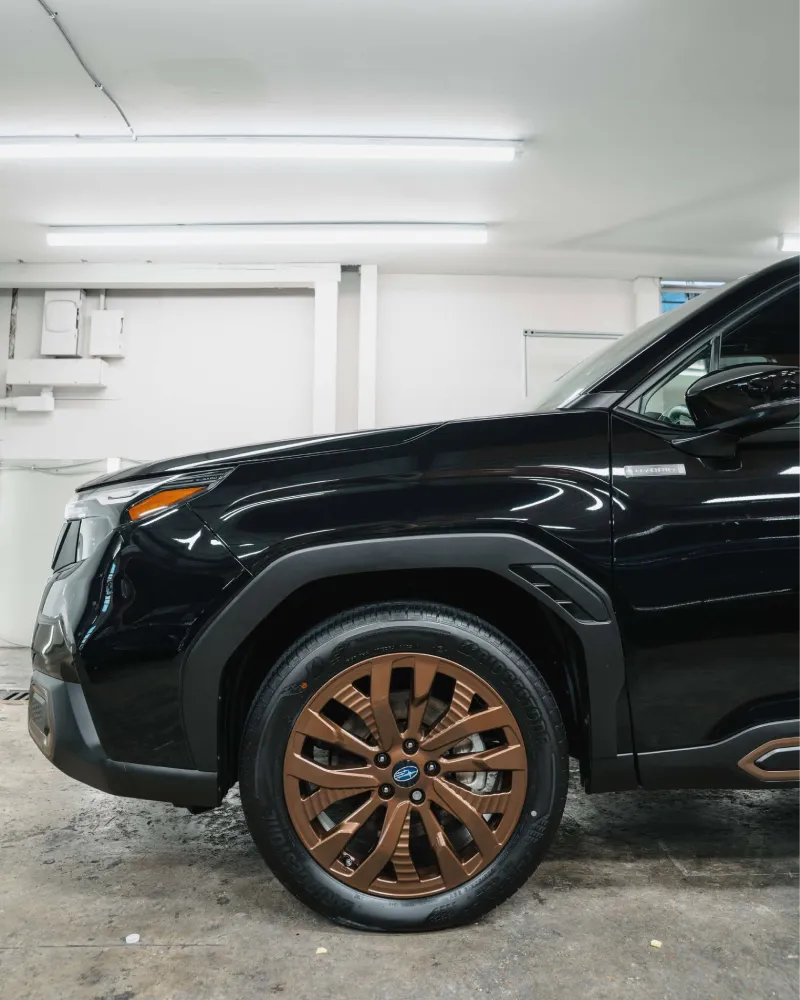
Gloss Enhancement and Optical Depth
Ceramic coatings improve how light interacts with the paint surface by reducing microscopic surface irregularities. This results in:
- Increased reflectivity
- Sharper visual clarity
- Deeper color perception
- A smoother, more uniform finish
This optical improvement is often described as a “wet look” or “glass-like finish,” especially after proper curing.
Performance Comparison
| Feature | Ceramic Coating | Wax | Sealant |
| Lifespan | 2–7+ years | 2–6 weeks | 3–6 months |
| UV Resistance | High | Low | Medium |
| Chemical Resistance | High | Low | Medium |
| Hydrophobic Effect | Strong | Moderate | Moderate |
| Maintenance Demand | Low | High | Medium |
Real-World Installation Conditions and Environmental Impact
Vehicle environment plays a major role in determining preparation requirements and coating performance.
For example, vehicles regularly driven through dense commercial corridors near Downtown Houston often accumulate heavy industrial fallout and embedded contaminants, requiring extended decontamination and polishing before coating application.
Vehicles stored in controlled residential environments such as River Oaks typically require lighter correction, but still need careful inspection for swirl marks, wash marring, and dealership-induced defects.
In mixed-use urban environments like Montrose, vehicles often experience inconsistent exposure to pollutants and road debris, requiring a balanced correction approach to achieve uniform coating adhesion across all panels.
These variations highlight an important reality: Houston, TX, ceramic coating performance depends heavily on surface preparation and environmental conditions, not just the coating product itself.
Professional Application Methodology
At Houston Paint Protection, ceramic coating installation is performed using a controlled, multi-stage process designed to ensure consistent bonding and long-term durability.
This includes:
- Full paint inspection and thickness measurement
- Defect analysis and correction planning
- Multi-stage polishing for surface refinement
- Chemical decontamination and oil removal
- Controlled application in stable environmental conditions
- Post-cure inspection for hydrophobic activation and uniformity
This structured approach ensures the coating bonds correctly and performs consistently across different vehicle types and paint systems.
Misconceptions About Ceramic Coating
A common misunderstanding is that ceramic coating makes a vehicle scratch-proof. While it improves resistance to micro-marring and light swirl marks, it does not prevent rock chips, deep scratches, or impact damage.
Other common misconceptions include:
- “It eliminates vehicle maintenance” → It reduces cleaning effort but does not replace maintenance
- “All ceramic coatings perform the same” → Performance varies significantly based on formulation and installation quality
- “New vehicles are ready for coating immediately” → Most require correction due to transport or dealership defects
Accurate expectations are essential for long-term satisfaction and realistic performance outcomes.
Technical Specifications and Definitions
- SiO₂ Content: Influences hardness, durability, and chemical resistance
- Hydrophobic Contact Angle: Measures how effectively water beads and rolls off the surface
- Cured Film Thickness: Micron-level protective layer formed after curing
- Curing Time: Duration required for full chemical bonding and hardening
- Surface Hardness Rating: Relative resistance to micro-abrasion and wash-induced marring
About Houston Paint Protection
Houston Paint Protection is a Houston-based automotive protection specialist focused on paint protection film, ceramic coating, window tint, and paint correction services designed to preserve and enhance vehicle finishes. The company emphasizes high-quality installation, careful surface preparation, and attention to detail as the foundation of long-lasting results. Their approach is centered on protecting vehicles from everyday damage while improving overall appearance through professional-grade techniques and products.
In Summary
Ceramic coating bonds to automotive paint through a controlled chemical crosslinking process that integrates directly with the clear coat, creating a durable protective surface that enhances gloss, chemical resistance, and long-term durability.
When properly installed, it becomes one of the most effective modern solutions for preserving automotive paint under real-world driving conditions, as offered by Houston Paint Protection.
To protect your vehicle with professional ceramic coating and paint correction services, contact us today to schedule a consultation.
Frequently Asked Questions
How long does ceramic coating last?
Typically 2–7 years depending on product quality, driving conditions, and maintenance habits.
Can ceramic coating be applied to new cars?
Yes, but most new vehicles still require paint correction to remove defects from transport or dealership handling.
Does ceramic coating eliminate washing?
No. It reduces contamination buildup and makes cleaning easier but does not eliminate maintenance.
Can ceramic coating be removed?
Yes. It can be removed through machine polishing during paint correction.