
Protecting a Tesla’s paint requires more than occasional waxing or careful washing. The most effective long-term solution is Paint Protection Film (PPF), a transparent urethane layer engineered to absorb physical damage before it reaches the factory clear coat. It preserves gloss, reduces visible wear, and helps maintain resale value over time. For owners researching tesla paint protection in Houston, PPF is widely considered the industry benchmark for durable, real-world paint preservation.
Unlike temporary coatings, PPF provides a physical barrier that continuously protects against rock chips, abrasions, and environmental contaminants while maintaining an almost invisible finish when professionally installed.
Why Tesla Paint Needs Real Protection in Everyday Driving
Tesla vehicles are designed with modern, efficiency-focused paint systems that prioritize production consistency and aesthetics. However, in real-world conditions, this paint system is more vulnerable to surface wear than many owners expect.
In professional detailing environments, Tesla paint commonly shows early-stage damage even when vehicles are carefully maintained. This is not due to neglect, but due to exposure to normal driving conditions.
Common real-world paint damage patterns:
- Rock chips on front bumpers and hoods from highway driving
- Swirl marks caused by improper washing or automated brushes
- Chemical etching from bird droppings, sap, and road debris
- UV-related dulling over extended outdoor exposure
- Micro-abrasions during drying or dust contact
These issues typically appear within the first year of ownership for unprotected vehicles, especially those used for daily commuting or highway travel.
What Paint Protection Film Actually Is
Paint Protection Film is a multi-layer thermoplastic polyurethane material designed to protect automotive paint systems. Unlike coatings that sit on the surface, PPF functions as a sacrificial layer that absorbs damage.
Definition List: Core Engineering Components of PPF
Thermoplastic polyurethane base layer
Provides flexibility and impact absorption, allowing the film to deform under stress and return to shape.
Aliphatic topcoat layer
Resists yellowing and maintains optical clarity under UV exposure.
Self-healing surface technology
Allows minor scratches to disappear when exposed to heat energy such as sunlight or warm water.
Pressure-sensitive adhesive layer
Creates a stable bond with factory paint while allowing safe removal when installed correctly.
Hydrophobic surface treatment (premium films)
Reduces water spotting and makes cleaning easier by minimizing surface tension.
These layers work together to create a protective system that performs consistently under real driving conditions, not just controlled laboratory testing.
Types of PPF and When Each One Makes Sense
Choosing the right film depends on driving habits, aesthetic preferences, and long-term ownership goals.
Comparison Table: Real-World PPF Options
| Type of Film | Appearance | Protection Level | Best Real-World Use |
| Gloss PPF | Enhances factory shine | High | Daily-driven Tesla vehicles |
| Matte PPF | Satin or stealth finish | High | Aesthetic customization projects |
| Ceramic-infused PPF | Extra slickness and stain resistance | Very High | High-exposure or low-maintenance preference |
| Partial coverage | Front bumper, hood, mirrors | Moderate | Budget-conscious protection |
| Full-body coverage | Entire vehicle exterior | Maximum | Long-term ownership and resale focus |
In practice, full-body protection is often recommended for owners who plan to keep their vehicle for several years or drive frequently in high-debris environments.
Step-by-Step Installation Process (What Professionals Actually Do)
The performance of PPF depends heavily on installation quality. Even premium film can fail if applied incorrectly or in uncontrolled conditions.
Standard professional installation workflow:
- Paint inspection and thickness evaluation
- Deep wash and chemical decontamination
- Surface correction (if swirl marks or defects exist)
- Alcohol-based surface preparation
- Precision film cutting (digital templates or hand trimming)
- Wet application for positioning accuracy
- Squeegee removal of air and moisture
- Edge wrapping for long-term adhesion stability
- Heat curing to activate bonding strength
- Final quality inspection under controlled lighting
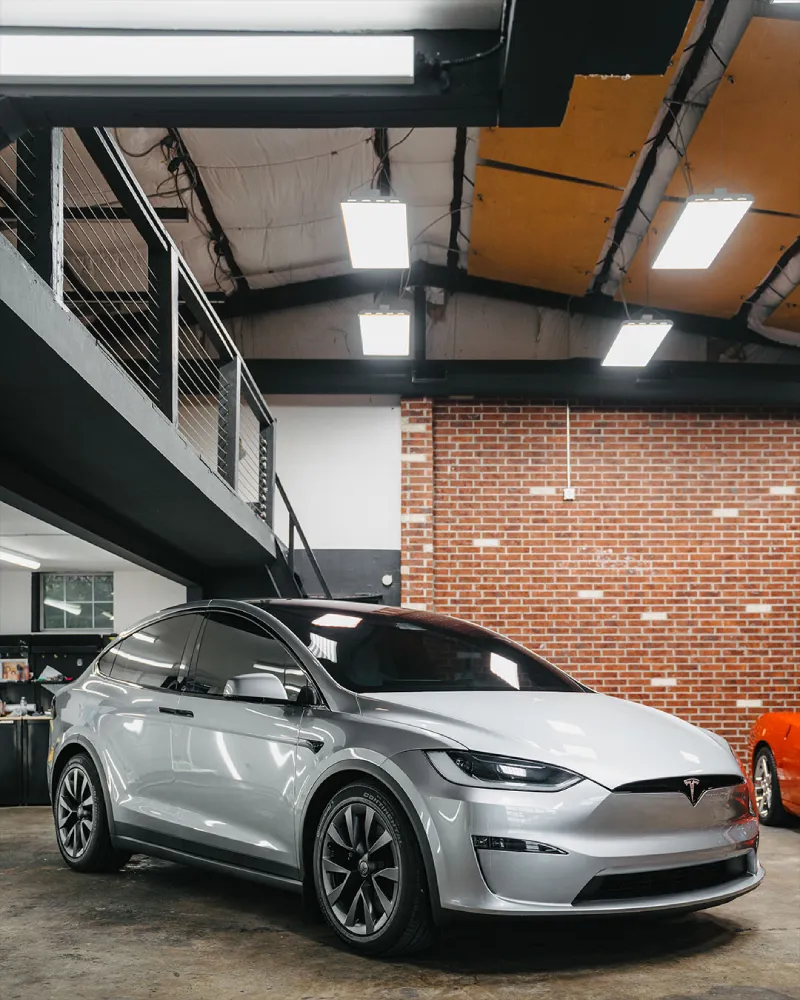
Professional installers such as Houston Paint Protection rely on controlled environments to prevent dust contamination, which is one of the most common causes of installation defects.
Real Benefits of PPF for Tesla Owners (Based on Field Experience)
PPF delivers measurable protection benefits that extend beyond appearance.
| Benefit | What It Means in Practice | Long-Term Effect |
| Rock chip resistance | Prevents front-end paint damage from debris | Maintains factory finish integrity |
| Scratch reduction | Minimizes swirl marks from washing | Cleaner visual appearance over time |
| UV protection | Slows paint fading and oxidation | Preserves color depth |
| Chemical resistance | Protects against sap, bird droppings, and contaminants | Reduces paint etching |
| Easier cleaning | Contaminants release more easily | Lower maintenance effort |
From a long-term ownership perspective, these benefits reduce the need for repainting or correction work.
Misconceptions About Paint Protection Film
Myth: PPF is only for high-end or exotic cars
This is outdated. Houston Tesla paint protection film is widely used because these vehicles are among the most commonly protected, given their paint sensitivity and frequent daily use.
Myth: PPF is always visible
High-quality films are optically clear. Visible edges or haze usually indicate poor installation rather than material quality.
Myth: Wax provides similar protection
Wax only enhances gloss temporarily. It does not offer structural protection against chips or abrasions.
Myth: PPF eliminates maintenance needs
PPF reduces damage but still requires regular washing to maintain clarity and performance.
Myth: All installers produce equal results
Installation quality varies significantly based on training, environmental control, and precision techniques.
Real-World Installation Insights from Professional Work
Field experience consistently shows how environment and usage patterns affect paint durability.
Vehicles driven primarily on highways show higher rates of front-end impact damage without protection. Urban vehicles experience greater buildup of contamination and swirl formation due to stop-and-go conditions.
In a documented service case involving vehicles in Montrose, early-stage PPF installation significantly reduced swirl development after one year of ownership.
A fleet protection project involving vehicles in The Heights showed a measurable reduction in repaint and correction needs after switching to full-body film protection.
Another long-term evaluation in River Oaks demonstrated improved gloss retention and fewer detailing interventions for vehicles with professionally installed PPF.
These outcomes highlight the importance of early installation rather than reactive paint correction.
Maintenance Guidelines for Long-Term Film Performance
Proper care is essential to maintain clarity and durability.
- Use pH-neutral automotive shampoo only
- Avoid abrasive mitts or sponges
- Dry with clean microfiber towels
- Wash regularly to prevent buildup
- Avoid high-pressure water directly on film edges
- Use PPF-safe detailing sprays for enhanced gloss
When maintained correctly, high-quality film can remain clear and effective for many years.
Why Installation Quality Matters More Than the Film Itself
PPF is not just a material; it is a system that depends on precision installation. Even premium-grade film can fail prematurely if applied incorrectly.
Professional installers ensure:
- Dust-free controlled environments
- Precise alignment and panel matching
- Proper adhesive activation and curing cycles
- Manufacturer-approved installation techniques
For owners evaluating Tesla paint protection in Houston, TX, installer expertise is the most important factor in determining long-term durability and visual clarity.
Paint Protection Film (PPF) is a transparent urethane layer applied to Tesla paint that protects against rock chips, scratches, UV damage, and environmental contaminants. It is the most effective long-term solution for preserving factory finish, reducing maintenance needs, and maintaining resale value under real-world driving conditions.
In Summary
Protecting a Tesla’s paint is ultimately about preventing permanent damage before it happens. Paint Protection Film remains the most effective method for preserving factory finish, reducing long-term maintenance costs, and maintaining visual quality under daily driving conditions.
For owners considering Tesla paint protection, the difference between average and exceptional results comes down to installation quality, not just material choice. Providers like Houston Paint Protection emphasize precision installation techniques to ensure optimal adhesion, edge alignment, and long-term durability.
To ensure your vehicle receives precise, professional-grade protection backed by real installation experience, contact us today to schedule a consultation and explore tailored PPF solutions designed for long-term durability and clarity.
People Also Ask
How long does PPF last on a Tesla?
High-quality PPF typically lasts 7–10 years, depending on environmental exposure and maintenance habits.
Can PPF be removed safely?
Yes. When professionally removed, it does not damage factory paint.
Is ceramic coating better than PPF?
They serve different roles. PPF provides physical protection, while ceramic coatings enhance gloss and hydrophobic performance.
Can older Teslas receive PPF?
Yes, but paint correction is often required beforehand to ensure proper adhesion.
How long does full installation take?
Most full-body installations take 2–5 days depending on complexity.