Bird droppings and tree sap are acidic and sticky, posing a potential hazard to paint protection film (PPF). The safest approach is to soak the contaminant, use pH-neutral cleaners or isopropyl alcohol sparingly, and gently lift it with a soft microfiber cloth. Avoid aggressive scrubbing to preserve the self-healing topcoat, which can recover minor surface damage if handled properly.
Understanding the Risks of Contaminants on PPF
PPF is designed to protect your vehicle’s paint, but not all contaminants are harmless. Bird droppings are highly acidic and can etch the paint protection film if left untreated, leaving marks that compromise both appearance and protection. Tree sap is sticky, attracts dirt, and can harden on the surface, making removal more challenging. Even the self-healing topcoat, designed to recover minor scratches, can be damaged by chemical etching or harsh mechanical pressure.
The self-healing topcoat works through a flexible polymer layer that recovers small scratches over time. However, prolonged exposure to acidic substances or sticky residues can overcome this layer’s ability to recover. In Houston, TX, vehicle owners frequently face these issues due to the urban bird population and tree varieties that produce resin-rich sap, especially after seasonal changes or storms.
Understanding the specific risks helps prevent long-term damage. Houston PPF effectiveness relies not only on its initial application but also on timely maintenance and proper cleaning techniques. Awareness of these risks allows owners and technicians to act before minor damage becomes permanent.
Comparison of Cleaning Methods for PPF
| Method | Pros | Cons | Safety for Self-Healing Topcoat |
| Soaking & Gentle Wipe | Minimizes mechanical stress and reduces the risk of scratches | May require repeated soaking for stubborn residues | High |
| Isopropyl Alcohol | Dissolves sap effectively, quick action | Can dry film if overused or misapplied | Medium |
| Specialized PPF Cleaner | Formulated for paint protection, safe for topcoat | More expensive than household solutions | Very High |
| Abrasive Scrubbing | Removes stubborn residues quickly | High risk of scratches and etching | Low |
Gentle soaking and lifting remain the safest options for preserving the self-healing topcoat. Chemical cleaners can assist with tough residues, but should always be tested in a small area before broader use. Abrasive scrubbing is rarely necessary and should only be considered as a last resort.
Technicians in Houston, TX, have noted that using soaking techniques significantly reduces the risk of etching compared to aggressive mechanical cleaning, especially in areas prone to heavy bird activity or where pine trees are common.
Numbered Steps to Remove Bird Droppings or Tree Sap Safely
- Immediate Action: Cover the droppings or sap with a damp microfiber towel to soften the contaminant. Prompt action prevents acids from bonding with the topcoat.
- Soak: Let the towel sit for several minutes to allow the residue to loosen without scrubbing. Re-soaking may be necessary for hardened sap.
- Use Gentle Cleaner: Apply a pH-neutral soap or PPF-safe solution. For stubborn sap, a minimal amount of diluted isopropyl alcohol may be used, carefully avoiding excessive contact.
- Lift Carefully: Gently blot or lift the residue using soft strokes. Avoid scrubbing back-and-forth, which can damage the topcoat and reduce self-healing effectiveness.
- Rinse Thoroughly: Use clean water to remove all traces of the cleaning solution, acids, and sap residues.
- Dry: Pat dry with a soft microfiber towel to prevent water spots or streaks, which can trap dirt and lead to further contamination.
- Optional Maintenance: Apply a protective coating or light wax designed for PPF to reinforce the self-healing topcoat and maintain a smooth surface.
During a maintenance session for a luxury vehicle in Houston, TX, following these steps enabled technicians to safely remove tree sap without causing scratches. The proactive approach prevented long-term damage and maintained the topcoat’s self-healing properties.
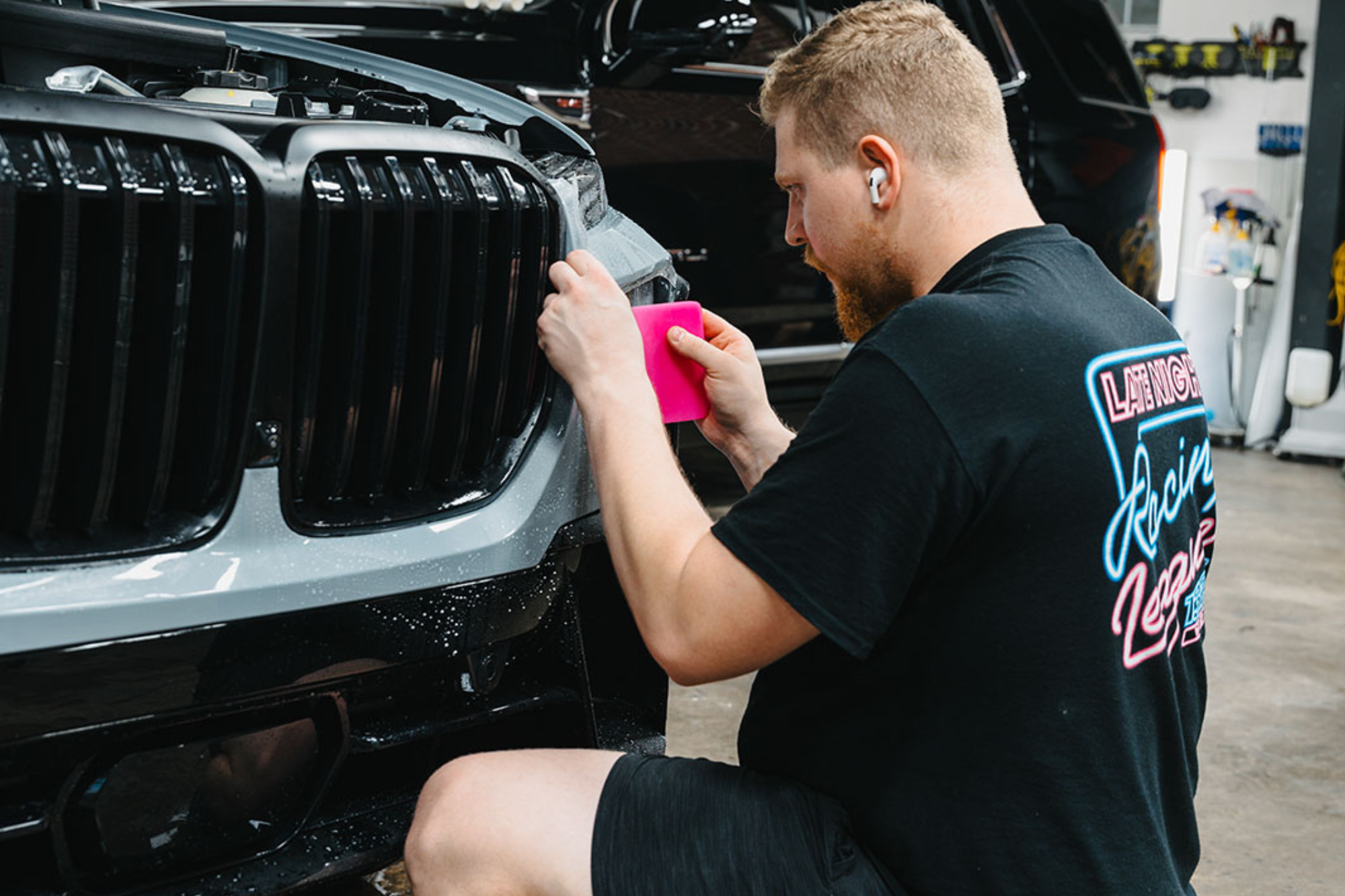
Applying This to Solve the Problem
Regular inspection of PPF is essential. Look for fresh contaminants, particularly after parking under trees or areas with frequent bird activity. Prioritize soaking and gentle lifting over scrubbing. Testing any chemical cleaner on a small, inconspicuous area ensures safety and prevents accidental etching.
Owners seeking paint protection film in Houston, TX, can implement these methods themselves or guide their technicians. Proper maintenance reduces the risk of etching and ensures the PPF continues to perform as intended. Understanding the unique care required for this is particularly valuable in regions where environmental debris accumulates quickly. Regular care prevents minor contaminants from causing permanent damage.
For residents of Houston, TX, consistent application of these steps can extend the lifespan of PPF, keeping vehicles looking pristine while maintaining the topcoat’s self-healing properties. Vehicles parked in shaded or tree-dense areas may require more frequent checks to remove sap or droppings before damage occurs.
Understanding the Symbolic PPF Communication System
A standardized symbol and code system can communicate the Paint Protection Film in Houston health status and recommended cleaning methods efficiently. Each symbol conveys the severity of contamination, suggested cleaning techniques, and the recovery potential of the self-healing topcoat. For instance, a droplet icon may indicate acid-based residues, such as bird droppings, while a leaf icon signals sticky resin contamination.
Technicians can use this system to consistently document PPF conditions across multiple vehicles. It enables optimized cleaning sequences, reducing the risk of damage to the self-healing topcoat. In practice, the system can help identify stubborn contaminants, guide safe removal processes, and ensure both efficiency and preservation of the PPF’s protective qualities.
Debunking a Common Industry Myth
Myth: PPF is impervious to bird droppings and tree sap.
Reality: PPF provides strong protection, but acids in bird droppings and sticky sap can etch or stain the self-healing topcoat if not removed promptly. Immediate and careful cleaning is essential to preserve the film’s integrity. Relying solely on the self-healing feature without preventive care can lead to permanent damage and reduce the film’s effectiveness over time.
In Summary
Safely removing bird droppings and tree sap from paint protection film (PPF) requires soaking the area, gently lifting contaminants, and using pH-neutral cleaners or diluted isopropyl alcohol. Abrasive scrubbing should be avoided to protect the self-healing topcoat. At Houston Paint Protection, regular inspection and adherence to proper cleaning protocols help ensure long-term film protection. Vehicle owners in Houston, TX, benefit from proactive maintenance that keeps their PPF clear, intact, and performing optimally while minimizing the risk of etching or staining.
Contact us today to schedule a service or learn how to keep your vehicle’s paint protection film in top condition.
People Also Ask
Q: Can I use any cleaner on PPF?
A: Only pH-neutral cleaners or PPF-safe solutions should be used. Avoid strong chemicals that could etch the topcoat.
Q: How long can bird droppings stay on PPF safely?
A: Droppings should be removed promptly. Extended exposure can risk etching and permanent staining.
Q: Does the self-healing topcoat remove scratches from cleaning?
A: Minor scratches may heal over time, but chemical etching or aggressive scrubbing can permanently damage the topcoat.
Q: Is tree sap more damaging than bird droppings?
A: Both are damaging, but sap can attract dirt and become sticky, making removal more challenging.
Q: How does a standardized PPF symbol system improve maintenance?
A: It provides clear indicators of contamination and topcoat condition, enabling safer and more efficient cleaning and care methods.