Installing paint protection film over repainted or repaired panels carries measurable risks if the paint has not fully cured or was improperly refinished. The most common issues include adhesion failure, edge lifting, trapped solvent gases (outgassing), and even paint delamination during film removal.
These risks do not come from the film itself but from instability in the underlying paint system. When the surface is properly cured and verified, paint protection film performs reliably even on repaired panels.
Why Repainted Panels Behave Differently Under Paint Protection Film
Paint protection film is engineered to bond to clear-coated surfaces using pressure-sensitive acrylic adhesives. On factory paint, this bond is predictable because OEM finishes are applied in tightly controlled environments with precise curing cycles.
Repainted panels introduce variability. Even high-quality collision repair work depends on technician skill, paint chemistry, bake temperature, humidity, and drying time. These variables directly affect the surface’s stability under long-term film adhesion.
In practice, installers treat every repainted panel as a unique substrate rather than assuming uniform behavior across the vehicle.
OEM vs Refinished Paint Performance Comparison
| Factor | OEM Factory Paint | Refinished Paint |
| Application environment | Controlled robotic process | Human-applied |
| Curing method | High-temperature bake | Air dry or booth bake |
| Solvent stabilization | Fully stabilized | May continue off-gassing |
| Adhesion consistency | Extremely uniform | Variable by shop quality |
| Film compatibility | Predictable | Requires inspection |
This variability is the core reason why inspection is mandatory before applying paint protection film.
6 Real Risks of Applying Paint Protection Film Over Repaired Panels
1. Adhesion Failure Between Film and Paint
Modern paint protection film uses pressure-sensitive adhesives designed for long-term bonding. However, contaminants such as silicone, wax residue, polishing oils, or uncured clear coat can prevent proper adhesion.
When adhesion is compromised, the film may exhibit:
- Early edge lift
- Reduced clarity in bonded areas
- Premature peeling under heat cycling
2. Paint Lifting During Installation
One of the most serious risks is physical paint separation during installation. Repainted panels that lack full mechanical bonding to primer layers may lift under squeegee pressure or film repositioning.
This is especially common on:
- Bumper covers
- Fender edges
- High-flex body panels
Once lifting occurs, repair often requires full repainting rather than film adjustment.
3. Outgassing and Bubble Formation
Fresh or improperly cured paint continues to release trapped solvents. When paint protection film is installed too early, these gases become trapped beneath the film layer.
This leads to:
- Bubble formation
- Milky or hazy appearance
- Distortion in gloss levels
- Long-term adhesive disruption
Outgassing is one of the most misunderstood failure mechanisms in film installations.
4. Edge Lift and Environmental Stress Failure
Edges represent the weakest adhesion zone in any installation. Temperature cycles, pressure washing, and moisture exposure accelerate failure in areas where paint adhesion is already unstable.
Edge lift typically begins subtly and worsens over time if not addressed early.
5. Compromised Removal Safety Years Later
Paint protection film is designed for clean removal, but only when the underlying paint has proper adhesion strength.
If paint was marginal at installation, removal may cause:
- Clear coat separation
- Patch lifting of repainted areas
- Irreversible surface damage
This is a delayed but costly risk that many vehicle owners overlook.
6. Warranty Limitations and Coverage Gaps
Most premium film manufacturers provide warranties against yellowing, cracking, or adhesive failure, but these warranties typically assume the paint surface is OEM or properly cured.
If installed over unstable paint, coverage may be reduced or voided depending on the manufacturer’s guidelines.
How Professionals Evaluate Repainted Panels Before Installation
Professional installers do not rely on visual inspection alone. Repainted surfaces require technical verification before film is applied.
Standard Inspection Workflow
- Review repair history and panel origin
- Conduct a controlled lighting inspection
- Measure paint thickness using electronic gauges
- Assess surface contamination (silicone, wax, polish)
- Confirm cure timeline with repair documentation
- Perform adhesion risk evaluation
Each step reduces uncertainty and prevents premature installation failures.
Key Technical Terms Explained
Pressure-Sensitive Adhesive (PSA)
A specialized adhesive that bonds when pressure is applied, commonly used in paint protection film systems.
Outgassing
The emission of trapped solvents or gases from freshly applied paint as it continues curing.
Film Memory Tension
The tendency of film material to return to its original manufactured shape can stress weak paint bonds.
Cure Time
The period required for automotive paint to reach full chemical and mechanical stability.
How Long Should You Wait Before Installing Paint Protection Film?
Cure time depends heavily on the type of paint system and environmental conditions during refinishing.
Industry-Observed Cure Windows
| Paint Type | Typical Safe Installation Window |
| Air-dry refinish | 60–90 days |
| Bake-cured refinish | 30–60 days |
| OEM factory finish | Often immediate |
However, these are general guidelines. Some modern low-VOC or waterborne paints may require extended curing even after bake cycles.
Why Timing Matters More Than Film Quality
Film quality is rarely the cause of installation failure. Instead, instability in the underlying paint system determines long-term success.
For example, during a real-world evaluation for a vehicle owner in Whispering Pines, uneven curing was detected on a rear quarter panel due to inconsistent bake booth heat distribution. The film itself performed correctly, but the substrate beneath it was not stable enough to support long-term adhesion.
This highlights a key principle: paint condition always overrides film specification.
When Paint Protection Film Is Safe After Repair Work
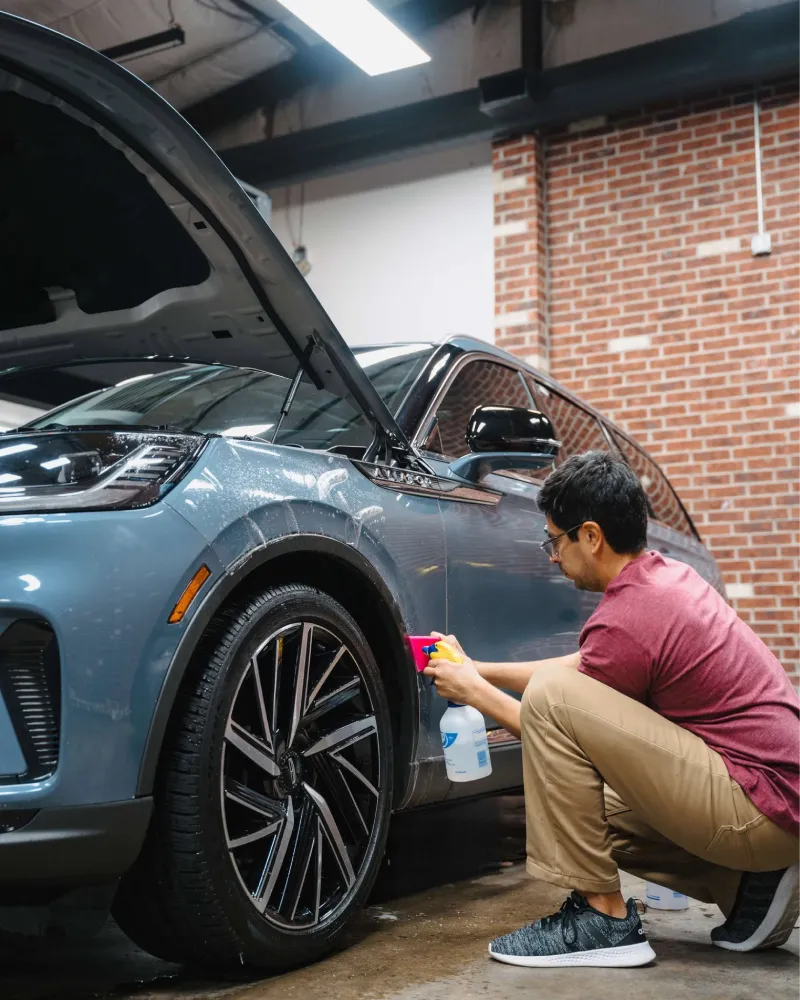
PPF installation is considered safe when all of the following conditions are met:
- Paint hardness is uniform across all repaired panels
- No solvent odor remains after curing
- Thickness readings align with expected refinishing ranges
- Surface shows no soft spots under pressure testing
- Repair documentation confirms full curing cycle completion
In high-demand areas such as Piney Point Village, TX, paint protection film applications are especially important due to frequent post-collision refinishing work on luxury vehicles.
Common Misconception: Paint Protection Film Fixes Paint Problems
This is one of the most persistent misunderstandings in the industry.
Paint protection film does not correct surface defects. It preserves whatever condition already exists beneath it.
It does NOT fix:
- Sanding scratches
- Orange peel texture
- Dust contamination
- Blending inconsistencies
- Clear coat waviness
Instead, it amplifies surface clarity, meaning defects often remain visible after installation.
Vehicles receiving Piney Point Village paint protection film often require correction work before installation to achieve optimal visual results.
Surface Preparation: The Most Important Stage of Installation
Proper preparation determines more than 50% of installation success.
Critical Prep Steps
- Multi-stage wash and decontamination
- Iron and tar removal treatment
- Clay bar refinement
- Isopropyl alcohol panel wipe
- Edge masking and inspection
Skipping any of these steps increases the risk of adhesion failure, even on properly cured paint.
This is particularly relevant for paint protection film in Piney Point Village, where luxury vehicles often undergo detailing or repair work prior to film application.
Structured Quality Control Process Used in Professional Installations
High-end installers use a repeatable evaluation system rather than relying on assumptions.
Step-by-Step Process
- Identify repair zones and panel history
- Measure coating thickness across all panels
- Verify curing timeline against manufacturer specs
- Perform contamination and adhesion risk checks
- Approve or delay installation based on data
This structured method significantly reduces long-term failure rates and ensures consistency across installations.
Even in premium applications such as paint protection film in Piney Point Village, TX, this process determines whether installation proceeds immediately or is delayed for safety.
About Houston Paint Protection: Installation Standards and Process Integrity
Houston Paint Protection follows a structured evaluation-first approach before every installation involving repaired or refinished panels. Rather than treating all vehicles as identical, each surface is individually assessed for stability, curing status, and contamination risk.
This process prioritizes long-term durability over installation speed. By evaluating paint condition before film application, potential issues such as adhesion failure, bubbling, or edge lift can often be prevented.
In real-world applications, especially for vehicles in Piney Point Village, TX, that require paint protection film, this level of inspection is critical due to the frequency of post-repair installations on high-value vehicles.
In Summary
Installing paint protection film over repainted or repaired panels is not inherently risky when the paint is properly cured and verified. The real risks emerge when installation is rushed or when surface preparation is incomplete.
Houston Paint Protection explains that adhesion failure, bubbling, and paint lifting are almost always signs of underlying paint instability rather than a defect in the paint protection film itself.
For vehicle owners seeking professional evaluation or installation guidance, contact us today to ensure your vehicle is properly assessed before installing paint protection film.
Frequently Asked Questions
Can paint protection film damage fresh paint?
Yes, if the paint is not fully cured, installation or removal can cause lifting or surface damage.
What causes PPF bubbling on repainted panels?
Most bubbling is caused by trapped solvents or contamination beneath the film.
Is bumper repainting safe for PPF?
Yes, but bumpers are high-risk due to flexibility and frequent repair work.
Does repainting affect film warranty coverage?
In some cases, yes. Warranty coverage may depend on paint condition and installation timing.
How can I tell if my paint is fully cured?
Only through a combination of time, hardness testing, and professional inspection.